
By 2026, brands that win online will be those that treat every asset as part of a smart, connected Content Marketing Strategy rather than a stream of disconnected posts. As algorithms tighten and attention fragments, marketers are discovering that the problem is rarely a lack of ideas—it is getting the right content in front of the right people at the right moment. For organisations serious about visibility, trust, and pipeline, distribution has become just as critical as creation.
Why content distribution matters more in 2026
Organic reach continues to slide across major social platforms, while decision-makers increasingly self-educate before talking to sales. That shift places huge pressure on content planning, because even exceptional articles, videos or reports fail if only a fraction of your market ever sees them. The brands cutting through in 2026 are those that design distribution deliberately, treating every channel as a lever in a broader system.
From creation-first to distribution-first strategy
A distribution-first model reverses the traditional process of “publish, then hope”. Instead, teams begin by mapping audience segments, deciding which content distribution channels matter most, and then designing assets tailored to each environment. Long-form reports might anchor a blog content strategy, while shorter takes feed social feeds, email, and partner newsletters. This approach not only extends the life of flagship pieces but also reduces duplication and guesswork.
- Start with a multi-channel content plan that defines primary and secondary platforms.
- Use a strategic content calendar to map topics, formats, and publishing cadence.
- Build a repurposing workflow so one core asset spawns multiple derivatives.
- Align metrics per channel, from reach and saves to leads and sales conversations.
- Review and prune underperforming activities each quarter to refocus effort.
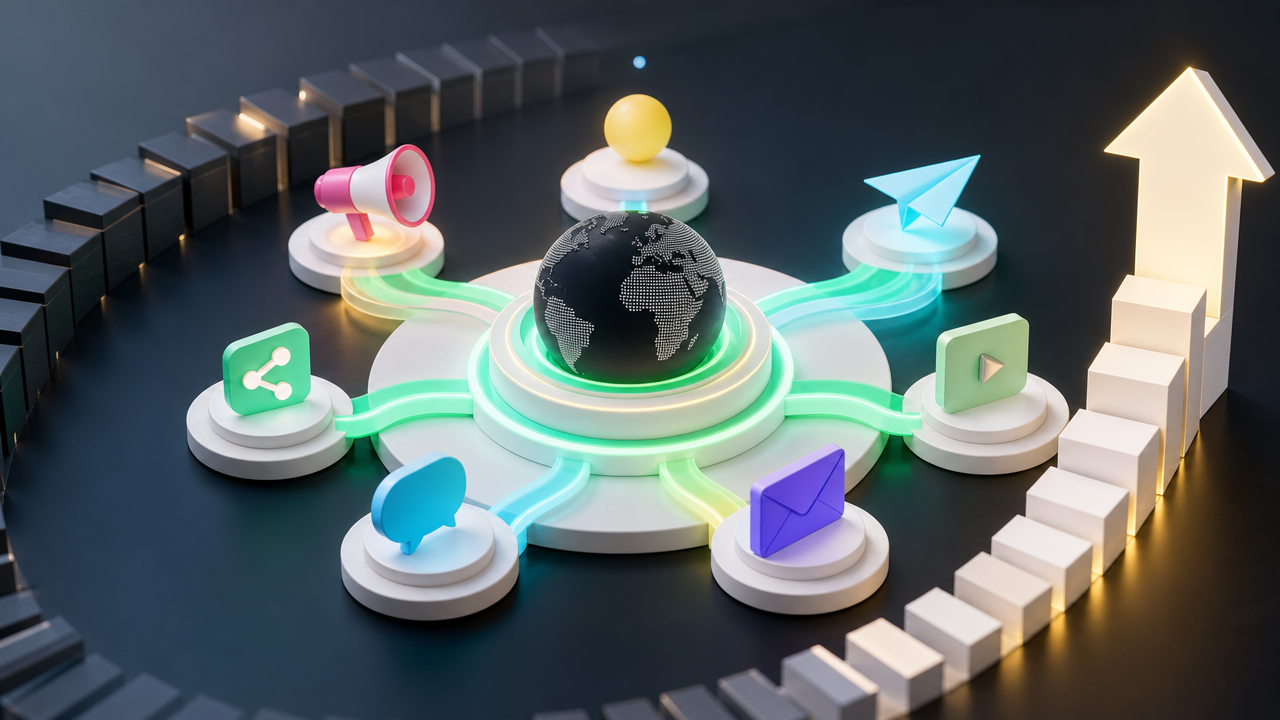
In 2026, the value of your content is no longer defined by what you publish, but by who actually encounters it and what they do next.
AI, data, and omnichannel journeys
AI-powered tools now sit at the heart of effective distribution, from prediction engines that flag the best time to post to systems that personalise recommendations on-site and in email. For brands running an integrated content strategy, this data backbone ensures each visitor sees assets aligned with their interests and stage in the journey. Combined with omnichannel journeys—spanning search, social, email, communities, and events—this creates a coherent experience even when touchpoints are scattered.
On the ground, that might mean pairing long-form white papers with short-form video recaps, interactive assessments, and targeted retargeting ads. A business committed to business blogging, for example, can use AI to identify audience-focused blog topics, then distribute them via newsletters, LinkedIn, and partner communities. The same signals can help refine long-term blog planning, showing which narratives actually correlate with qualified opportunities and sales outcomes.
Consistency is crucial. Brands that maintain a consistent publishing schedule are more likely to be favoured by algorithms and remembered by buyers. Yet consistency does not mean flooding every feed. High-performing teams deliberately select a few core outlets, then invest in depth, tailoring copy, visuals, and CTAs to each platform rather than cross-posting blindly. This disciplined focus avoids the trap of thinly spread resources and undercooked execution.
Distribution only becomes a growth engine when it is wired into lead capture and nurture. That is where a rigorous Content Marketing Strategy connects top-of-funnel assets to clear next steps such as demos, assessments, or strategy calls. Thoughtful use of landing pages, gated resources, and follow-up sequences can turn a spike of interest from business blog promotion into a measurable pipeline, without resorting to aggressive or intrusive tactics.
For marketers under pressure to justify spend, the advantage of this approach is accountability. With tracking, testing, and regular optimisation loops, leaders can see which pieces, pathways, and campaigns genuinely move the needle. Over time, patterns emerge—certain content types that spark consultations, certain sequences that accelerate decisions—informing future content planning and channel investment. The result is a more predictable, defensible contribution to revenue.
If your current efforts feel scattered, under-seen, or hard to tie to results, now is the time to reassess your approach to distribution. A specialist review of your channels, analytics, and editorial pipeline can reveal where a sharper focus, stronger data foundations, or a reworked multi-channel content plan would have the biggest impact. To explore what this could look like for your organisation, book a consultation with a content specialist and turn your publishing program into a deliberate, measurable growth engine.